

There are many things you may not naturally like, yet you may have to become them in order to fulfill the vision God has placed on your life.
One of the greatest limitations people place on themselves is the constant defense of their current identity.
“I’m not that kind of person.”
“I don’t like wearing suits.”
“I’m not a social media person.”
“This is just who I am.”
While authenticity is important, many people unknowingly use personality and preference as shields against growth. They mistake who they have become for who they are destined to become.
But have you ever stopped to ask yourself a simple question?
Where did those preferences come from?
Most of what you like today did not appear naturally. It was shaped by your environment, your upbringing, your experiences, your exposure, and the patterns you have repeated over time.
What feels normal today was once unfamiliar.
What you now call “your personality” may simply be a collection of habits formed through conditioning, comfort, and familiarity.
The danger is that we become so attached to this current version of ourselves that we assume it is permanent.
Yet sometimes, the version of you that feels most comfortable is completely disconnected from the future God intends for you.
The Version Your Destiny Requires
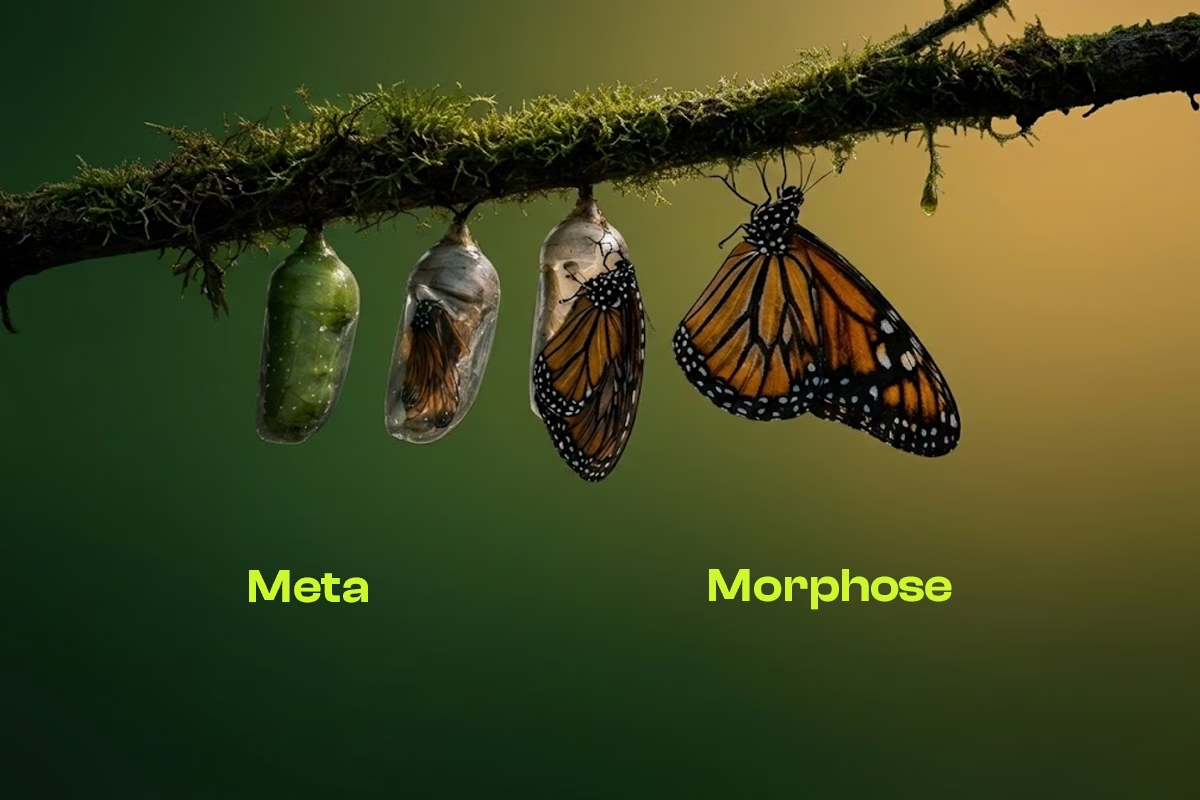
Every assignment has a version of a person capable of carrying it and growth is the process of becoming that person.
God may show you a vision long before He finishes preparing you for it. The gap between where you are and where He is taking you is often filled with transformation.
That transformation may require you to become more disciplined when you naturally prefer spontaneity. It may require you to develop communication skills when you would rather remain silent. It may require you to build a public presence when you enjoy staying behind the scenes. It may require you to lead people, manage teams, organize systems, develop emotional intelligence, change careers, or embrace responsibilities you never imagined carrying.
None of these changes invalidate who you are. They simply prepare you for where you are going.
The person your future requires may not think, speak, or behave exactly like the person you are today.
Stop Negotiating with Destiny
One of the biggest mistakes people make is becoming emotionally attached to their present identity. We often reject opportunities for growth because they feel uncomfortable or unnatural.
Meanwhile growth almost always feels unnatural before it becomes normal.
Every new capacity begins as discomfort. Every unfamiliar responsibility initially feels awkward. Every higher level stretches the person you currently are.
- You may not naturally enjoy public speaking, but your vision may require influence.
- You may dislike planning, but your future may demand structure.
- You may prefer privacy, but your assignment may require visibility.
- You may avoid difficult conversations, yet leadership may require courageous communication.
If something is necessary, right, and aligned with God’s purpose for your life, you cannot continue negotiating with destiny based on comfort.
Your feelings cannot become the standard for your future.
Transformation Is Intentional
You will not accidentally become the person your vision requires.
Transformation is intentional.
It happens through deliberate decisions, consistent habits, renewed thinking, healthy environments, and continuous learning.
- It requires humility—the humility to admit that your current version is not your final version.
- It requires teachability—the willingness to learn skills you never thought you needed.
- It requires courage—the willingness to enter unfamiliar territory without constantly retreating to, “This is just who I am.”
Every season of growth asks you to surrender something. Sometimes it is a limiting belief. Sometimes it is a harmful habit. Sometimes it is an outdated identity that no longer serves your calling.
The people who fulfill great assignments are rarely those who remain unchanged. They are those who continually allow God to shape them into the people their assignments require.
Becoming Is Not Betrayal
Many people fear that changing means losing themselves. However, genuine transformation is not the abandonment of your identity. It is the discovery of it.
You do not betray yourself by growing. You betray your potential when you refuse to.
The version of you capable of stewarding your vision may think differently, communicate differently, manage time differently, relate to people differently, and approach life differently than you do today.
Final Thoughts
Never become so loyal to your current version that you resist the person God is calling you to become.
Your preferences should never become prisons.
Your personality should never become an excuse for stagnation.
Your comfort should never become more important than your calling.
The question is not whether the next version of you feels natural.
The question is whether it is necessary.
Because the future God has prepared for you will often require a version of you that does not yet exist.
And your responsibility is to intentionally become that person—one decision, one discipline, and one act of obedience at a time.